
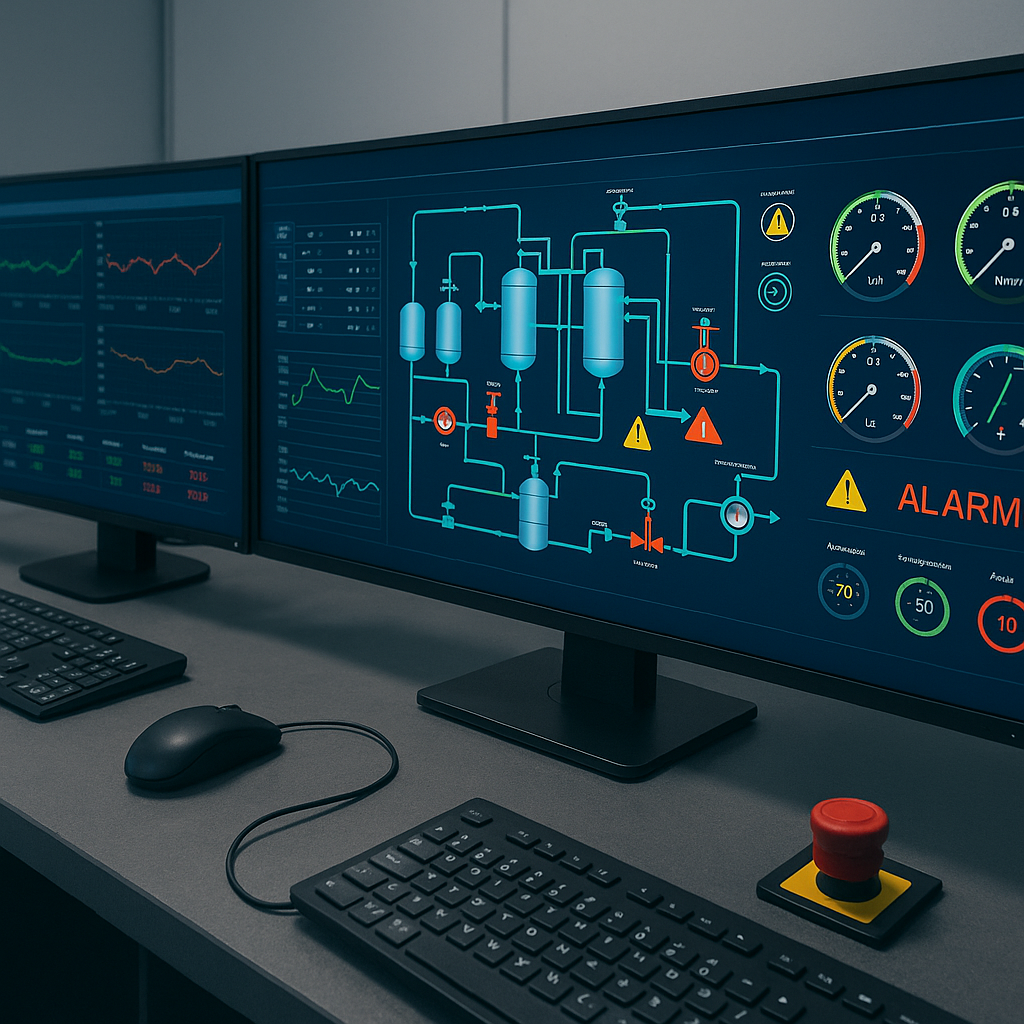
As the U.S. industrial landscape becomes increasingly complex—with hazardous materials handled across petrochemical plants, gas terminals, and energy infrastructure—ensuring real-time safety is not just a regulatory necessity, but a national imperative. Supervisory Control and Data Acquisition (SCADA) systems, traditionally used for automation and control, are now evolving into comprehensive safety intelligence platforms. By integrating SCADA with formal Safety Operating Procedures (SOPs), we can unlock a smarter, more responsive safety framework for high-risk facilities.
Real-Time Safety Monitoring: The Power of SCADA
At its core, SCADA is designed to monitor process variables such as pressure, temperature, flow, and levels across multiple assets and systems. In hazardous environments like LPG terminals or chemical plants, these variables are often the early indicators of potentially catastrophic incidents.
By integrating safety monitoring into SCADA dashboards, facility operators can:
- Detect gas leaks, overpressure events, or temperature surges the moment they occur.
- Receive automated alerts tied directly to specific SOPs and response protocols.
- Monitor confined space entries, valve statuses, and emergency shutdown systems in real time.
In essence, SCADA transforms from a passive monitoring tool into an active guardian of human safety and environmental compliance.
Automating Safety Protocols: SCADA Meets SOPs
Advanced SCADA platforms can be programmed to automate and enforce critical safety procedures. This means less reliance on manual oversight and more consistency in emergency responses. Integration benefits include:
- Mock Drill Automation: SCADA can schedule, log, and assess fire drills, leak response simulations, and evacuation procedures with time-stamped performance analytics.
- Emergency Alerting Systems: When integrated with SOPs, the system can issue alarms, activate interlocks, isolate hazardous sections, and notify response teams based on predefined criteria.
- Digital Logging & Compliance Tracking: Every action taken during an incident—manual or automated—is recorded and stored securely, streamlining post-incident audits and regulatory reviews.
This digital transformation of traditional safety workflows boosts both compliance reliability and operational efficiency.
Regulatory Alignment: NFPA, OSHA, and DOE Guidelines
The convergence of SCADA and safety protocols is not just technologically advantageous—it is fully aligned with current U.S. regulatory frameworks.
- NFPA 58 (Liquefied Petroleum Gas Code): Emphasizes real-time leak detection and system isolation, both of which are achievable via SCADA automation.
- OSHA 1910 Subpart H & PSM: Requires active monitoring and documentation of hazardous processes, a core SCADA function.
- U.S. Department of Energy (DOE) Smart Infrastructure Modernization: Encourages digital integration of safety systems and control technologies in energy-critical sectors.
By embracing SCADA-SOP integration, facility owners position themselves not only to meet these regulations, but to lead in safety innovation.
The Path Forward: Smarter Safety Starts Now
Hazardous facility operators in the U.S. face increasing complexity—from handling flammable materials to maintaining strict compliance under tightening federal regulations. By integrating SCADA with safety protocols, organizations can build a proactive safety ecosystem that saves lives, reduces liabilities, and supports long-term operational resilience.
As seen in international implementations by engineers like Adar Chowdhury—who oversaw SCADA-integrated safety frameworks across multiple LPG terminals—this isn’t just theory. It’s proven. And it’s time the U.S. takes the lead in adopting this smarter, safer future.