
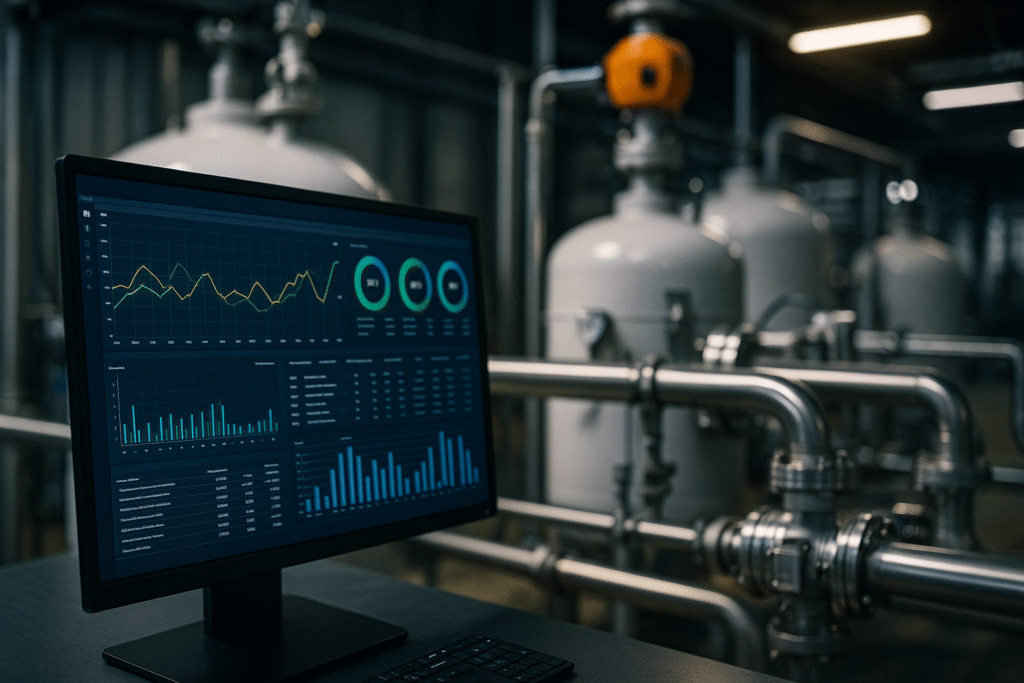
In high-risk energy infrastructure such as LPG terminals and hazardous materials (hazmat) facilities, a single equipment failure can have devastating consequences—ranging from asset loss to environmental disasters and even human casualties. Traditionally, maintenance was reactive: waiting for a problem to occur before addressing it. But in the age of data and artificial intelligence, predictive maintenance has emerged as a transformative solution that doesn’t just save money—it saves lives.
The Role of Predictive Maintenance in High-Risk Energy Facilities
Predictive maintenance (PdM) combines real-time data analytics with condition monitoring to forecast failures before they happen. Unlike periodic preventive maintenance, which adheres to fixed schedules, PdM relies on actual asset behavior to guide interventions.
In LPG and hazmat sectors, this approach is critical because:
- Pressurized tanks, compressors, PRVs, and pipelines operate under extreme conditions.
- Minor anomalies like temperature spikes, vibration irregularities, or flow inconsistencies can signal impending failures.
- Timely intervention can prevent catastrophic leaks, fires, or explosions.
Adar Chowdhury, a mechanical and project engineer with over a decade of hands-on experience in LPG terminals, has implemented SAP PM (Plant Maintenance) and Oracle CMMS to digitize maintenance workflows. His work has consistently reduced unplanned shutdowns, improved asset integrity, and optimized plant uptime.
Leveraging SAP PM and CMMS for Smart Maintenance
Enterprise solutions like SAP Plant Maintenance and Computerized Maintenance Management Systems (CMMS) enable facilities to track and manage the health of critical equipment. These systems support:
- Scheduled inspections and work orders
- Failure history and root cause analysis
- KPI dashboards for downtime, Mean Time Between Failures (MTBF), and Mean Time To Repair (MTTR)
- Integration with SCADA systems to fetch real-time asset data
In Adar’s projects, these tools were pivotal in managing LPG pump performance, compressor reliability, and bullet tank integrity. By digitizing maintenance logs and linking them with SCADA alarms, his teams detected early-stage anomalies—preventing both minor leaks and full system outages.
AI and Machine Learning: From Reaction to Prediction
The true power of predictive maintenance lies in AI-enhanced diagnostics. Machine learning models can analyze vast datasets to identify subtle patterns that human operators might miss, such as:
- Recurring faults in specific tank valves based on ambient conditions
- Accelerated wear trends due to thermal cycling or LPG composition
- Risk scores predicting which components are most likely to fail within the next 30 days
By feeding data from SAP PM, SCADA, and sensor logs into AI platforms, engineers like Adar are able to automate risk assessments, prioritize maintenance budgets, and plan targeted interventions—without halting operations.
Regulatory Imperatives: Why This Matters in the U.S.
Agencies such as the U.S. Department of Energy (DOE) and Occupational Safety and Health Administration (OSHA) emphasize proactive risk management in hazardous operations. Predictive maintenance is directly aligned with:
- OSHA 1910 mandates for Process Safety Management (PSM)
- NFPA 58 requirements for LPG system integrity
- DOE’s push for smart infrastructure and digitalization of energy terminals
Implementing predictive maintenance isn’t just smart—it ensures compliance and avoids penalties while fostering safer working environments.
A Safer, Smarter Future for Terminals
In an era when every second of downtime is costly and every oversight could be fatal, data-driven maintenance is not a luxury—it’s a necessity. Through the strategic integration of SAP PM, CMMS, AI diagnostics, and SCADA monitoring, predictive maintenance is reshaping how U.S. terminals manage safety, efficiency, and compliance.
With professionals like Adar Chowdhury already deploying these innovations across complex energy installations, the U.S. has a clear opportunity to accelerate adoption—and build a safer, more resilient energy future.