
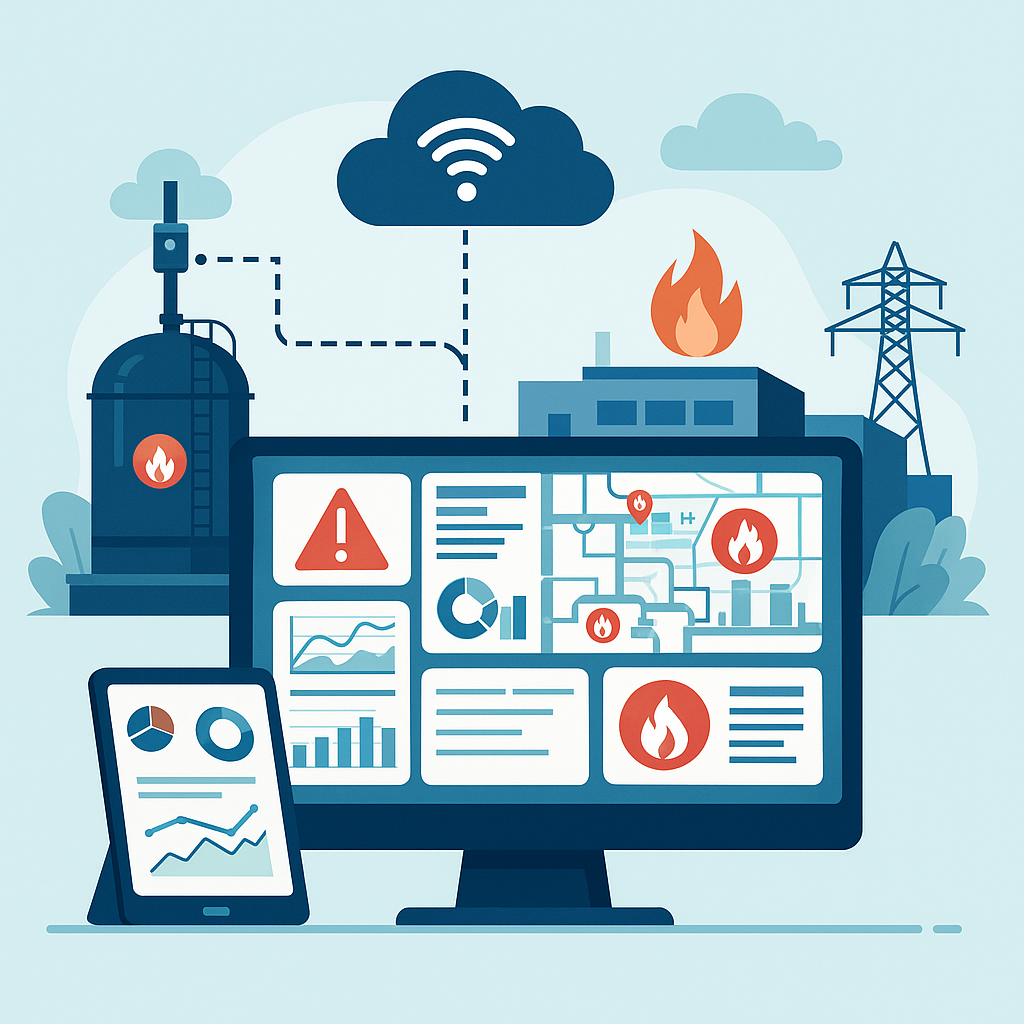
In the era of climate volatility, industrial incidents, and rapid urbanization, the ability to respond to emergencies in real-time is no longer optional—it’s essential. Traditional Emergency Response Plans (ERPs), often stored in binders or outdated spreadsheets, are insufficient to address today’s dynamic hazards. The solution? A digital transformation of safety management using Internet of Things (IoT) devices and ERP-integrated dashboards to create a smarter, faster, and more coordinated emergency response system.
Real-Time Awareness: The Role of IoT in Emergency Situations
IoT sensors act as the eyes and ears of emergency systems. By deploying a network of connected devices across energy facilities, gas terminals, and municipal utility plants, operators can instantly detect:
- Gas leaks and chemical spills
- Pressure anomalies in tanks and pipelines
- Unauthorized access to critical zones
- Smoke, heat, or vibration indicating early signs of fire or equipment failure
These IoT-enabled alerts can trigger automated shutdowns, activate fire suppression systems, and notify emergency responders within seconds, reducing reaction time and minimizing potential damage.
From Fragmented to Unified: ERP Dashboards for Emergency Management
The real transformation happens when IoT-generated safety data is integrated into enterprise dashboards. Instead of relying on siloed systems or manual incident tracking, modern ERP platforms can:
- Visualize live incident feeds from sensors across multiple facilities
- Display asset-specific risk scores based on current operating conditions
- Trigger role-based alerts to safety officers, plant managers, and first responders
- Log all emergency actions and time stamps for post-incident audits
Engineers like Adar Chowdhury, who have worked across multiple LPG terminals and hazardous installations, have firsthand experience deploying safety dashboards that integrate CMMS, SAP PM, and SCADA systems. In his projects, ERP-integrated dashboards enabled rapid coordination between safety officers and control room personnel—reducing incident escalation rates and improving compliance with ISO 45001 and NFPA standards.
Public-Sector Readiness: Municipal and Government Applications
Modernizing ERPs through digital tools is not just a private sector concern. Public infrastructure—water treatment plants, city gas networks, and emergency power facilities—faces similar risks. IoT-integrated emergency management systems can support:
- Municipal fire departments by providing real-time site maps and risk zones
- Disaster management agencies with automated SMS/email alerts and resource deployment recommendations
- Regulatory compliance by maintaining digital records for OSHA, EPA, and DHS audits
This is particularly relevant in regions vulnerable to hurricanes, chemical incidents, or utility failures. Cities equipped with ERP dashboards can respond more quickly, save lives, and reduce the strain on emergency services.
A Safer Tomorrow, Built on Smart Infrastructure
The next generation of emergency response will be predictive, connected, and coordinated. By modernizing ERPs with IoT sensors and ERP dashboards, we can build a safety system that evolves with the risk landscape. This isn’t a distant vision—it’s a working reality in smart facilities managed by pioneers like Adar Chowdhury.
Public and private sectors alike must adopt these digital safety solutions to protect infrastructure, employees, and communities—one sensor, one dashboard, and one decision at a time.